Alleluia Song Leonard Cohen Spiritual Reflection

- 1.
The Soul-Stirring Echo of “Hallelujah” in Modern Music Culture
- 2.
Unraveling the Myth: Who Actually Penned the Original “Hallelujah”?
- 3.
Why Is Leonard Cohen’s “Hallelujah” Considered His Magnum Opus?
- 4.
Decoding the Layers: What Does “Hallelujah” Really Mean?
- 5.
From Obscurity to Anthem: How “Hallelujah” Conquered the World
- 6.
The Cover Wars: Who Sang the Most Beloved Version?
- 7.
Cultural Immortality: “Hallelujah” in Film, TV, and Public Memory
- 8.
The Songwriting Alchemy Behind Cohen’s Masterpiece
- 9.
Global Reverberations: How Non-English Covers Kept the Flame Alive
- 10.
Keeping Cohen’s Legacy Alive Through New Generations
Table of Contents
alleluia song leonard cohen
The Soul-Stirring Echo of “Hallelujah” in Modern Music Culture
Ever wonder why just one word—alleluia—can make a grown-ass dude cry at a dive bar in Austin, a backyard wedding in Nashville, or even during a late-night Uber ride through Queens? That’s the damn spell of the alleluia song Leonard Cohen dropped on us like a velvet hammer. It ain’t just some tune you hum—it’s a midnight confession wrapped in minor chords and poetry that cuts deeper than your ex’s last text. You’ve heard it: maybe Jeff Buckley’s version drifting through foggy speakers at a Brooklyn loft party, or k.d. lang’s voice splitting the sky wide open during the Olympics. But none of that magic exists without Leonard Cohen—the gravel-voiced Montreal sage who sounded like he’d smoked a thousand cigarettes just to whisper truth into your ear. The alleluia song Leonard Cohen wrote? It’s not just famous—it’s the emotional GPS for every heartbreak, every “what the hell am I doing?” moment, and every tiny spark of hope we cling to when the world feels sideways.
Unraveling the Myth: Who Actually Penned the Original “Hallelujah”?
Let’s cut through the noise real quick—nope, it wasn’t Dylan (though he’d probably nod slow and say, “damn fine work”). Not Springsteen. Not even Prince in disguise. The OG alleluia song Leonard Cohen came straight outta his 10th-floor Montreal apartment in 1984, off the album *Various Positions*. Yeah, ‘84—back when leg warmers were fashion and MTV thought poetry was a typo. Cohen spent nearly half a decade wrestling with over 80 verses like he was trying to solve the universe with a guitar. And get this: Columbia Records straight-up ghosted it in the U.S., saying it “wasn’t commercial.” Bro, they missed the whole damn point. The alleluia song Leonard Cohen never wanted to be a chart-topper—it wanted to sit with you in the dark, pour you a drink, and say, “Yeah… I get it.”
Why Is Leonard Cohen’s “Hallelujah” Considered His Magnum Opus?
In a discography soaked in scripture, whiskey, and existential sighs, the alleluia song Leonard Cohen stands out like a neon cross in a desert. Why? ‘Cause it’s gloriously messy. It’s got King David lusting after Bathsheba while also begging for grace like a sinner at a revival tent. Sacred and profane tangled up like Christmas lights in July. That push-pull—between falling hard and falling apart—is the pulse of the alleluia song Leonard Cohen. Critics slept on it. Radio ignored it. But time? Time turned it into the unofficial hymn for folks who don’t go to church but still need to pray. Even Cohen joked, “I did my best, it wasn’t much”—but man, was he wrong. That song’s more than “much.” It’s everything.
Decoding the Layers: What Does “Hallelujah” Really Mean?
The Sacred Irony in Every Chord
Let’s be real—the alleluia song Leonard Cohen ain’t your grandma’s Sunday praise jam. “Hallelujah” means “praise God,” sure, but Cohen sings it after love crashes, after silence wins, after you’ve stared at your phone waiting for a text that never comes. He’s not shouting joy from a mountaintop—he’s whispering it from the bathroom floor at 3 a.m. That’s the twist: the alleluia song Leonard Cohen uses the holiest word to name the messiest feelings. It’s not about blind faith—it’s about finding something holy *in* the brokenness. As Cohen once said, “There’s a blaze of light in every word / It doesn’t matter which you heard.” That’s the soul of the alleluia song Leonard Cohen: meaning shifts like shadows on a highway at dusk—never fixed, always moving.
From Obscurity to Anthem: How “Hallelujah” Conquered the World
For years, the alleluia song Leonard Cohen lived in the shadows—played in dim-lit bars, covered by open-mic nobodies, ignored by Top 40. Then John Cale stripped it down to piano bones in ’91. Then Jeff Buckley floated it into the stratosphere in ’94 like it was an afterthought (bless his angelic heart). Next thing you know? It’s in *Shrek* (yeah, really), talent shows from Texas to Tacoma, memorials for fallen cops, even political rallies where nobody agrees on anything except this song. Funny how a track Columbia Records tossed aside now moves millions. Proof that the alleluia song Leonard Cohen wasn’t built for playlists—it was built for people needing to feel less alone.
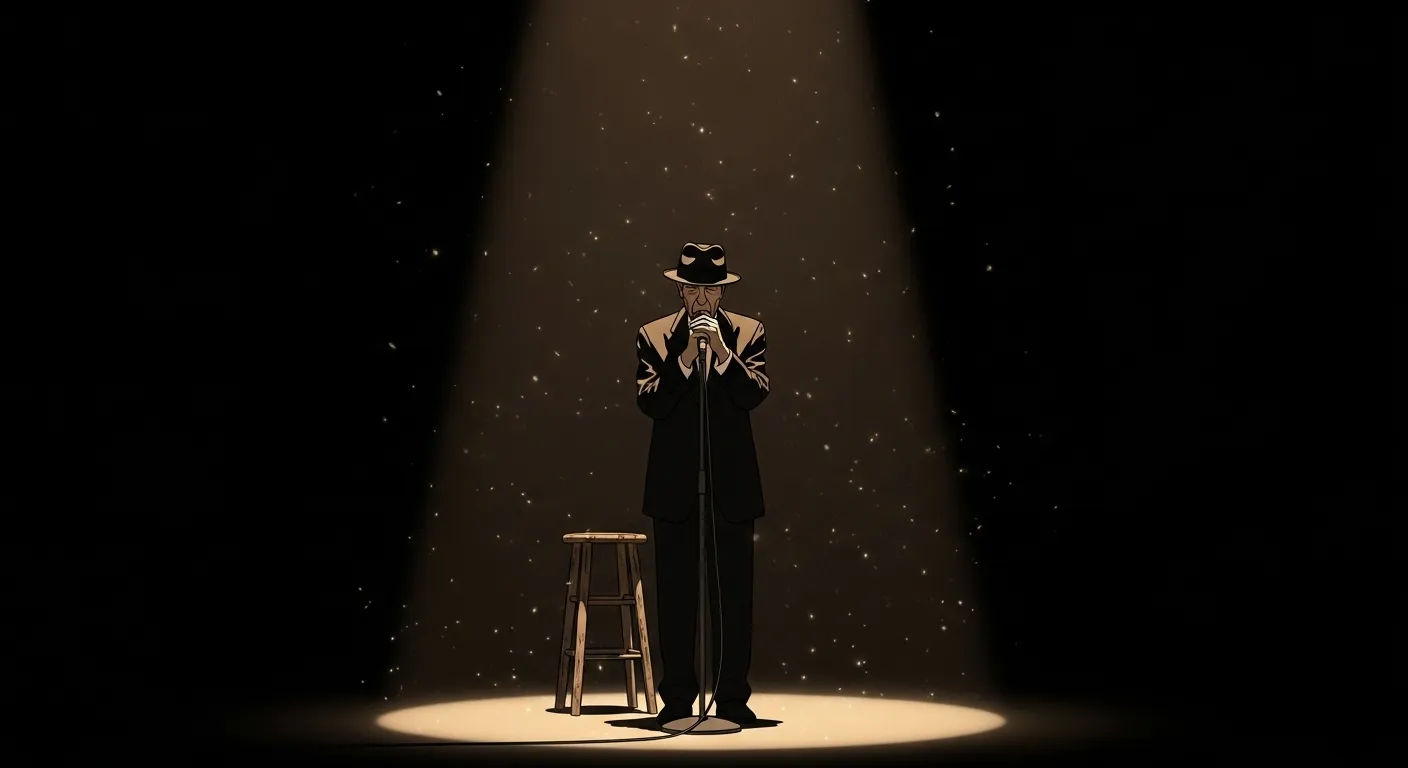
The Cover Wars: Who Sang the Most Beloved Version?
Ask ten folks in a Waffle House at 2 a.m., and you’ll get ten answers. Some swear by Jeff Buckley’s trembling falsetto—so fragile it sounds like ice cracking on a frozen lake. Others ride with k.d. lang’s 2010 Olympic performance, where her voice lifted the whole arena like a gospel spaceship. Rufus Wainwright brought Broadway drama; Alexandra Burke turned it into a Sunday choir showdown. But here’s the kicker: Cohen himself low-key loved Willie Nelson’s take—raw, twangy, no frills, just truth and a Telecaster. Still, numbers don’t lie: Buckley’s version’s got over 500 million streams on Spotify. But the alleluia song Leonard Cohen? It’s bigger than any cover. It’s a vessel—and every singer pours their own heartache right in.
| Artist | Year Released | Notable Feature | Streaming Popularity (Est.) |
|---|---|---|---|
| Leonard Cohen | 1984 | Original, sparse production | 120M+ |
| Jeff Buckley | 1994 | Ethereal vocals, reverb-heavy | 500M+ |
| k.d. lang | 2010 | Olympic Winter Games performance | 200M+ |
| Rufus Wainwright | 2001 | Featured in *Shrek* | 180M+ |
Cultural Immortality: “Hallelujah” in Film, TV, and Public Memory
Remember that gut-punch scene in *Watchmen* where Dr. Manhattan stares at Earth like it’s a dying campfire? Or the final episode of *The West Wing*, where silence says more than speeches ever could? Both leaned on the alleluia song Leonard Cohen to say what words couldn’t. It’s popped up in over 50 films—not as filler, but as emotional punctuation. After 9/11, after mass shootings, after hurricanes wipe out whole towns—it’s the alleluia song Leonard Cohen communities turn to. Not ‘cause it fixes anything, but ‘cause it holds space for the ache. In a world screaming for quick fixes, this song just sits with you in the questions. And that’s why it never gets old.
The Songwriting Alchemy Behind Cohen’s Masterpiece
Structure, Symbolism, and the Art of Repetition
On paper, the alleluia song Leonard Cohen looks simple: four chords (C, F, G, Am), a bassline walking downstairs, and that “hallelujah” refrain looping like a prayer wheel. But dig deeper. Each verse shifts POV—sometimes you’re King David on a rooftop, sometimes you’re the lover left behind, sometimes you’re just watching life burn. Lyrics swing from vivid snapshots (“you saw her bathing on the roof”) to big, blurry feelings (“love is not a victory march”). That’s the trick. The alleluia song Leonard Cohen doesn’t tell a story—it drops you into a mood. And that repeated “hallelujah”? It’s not a chorus—it’s a ritual. Every time it hits, it means something new: sarcastic, shattered, surrendered, or stubbornly hopeful. That, my friend, is songwriting witchcraft.
Global Reverberations: How Non-English Covers Kept the Flame Alive
From Patricia Kaas crooning it in smoky Parisian cabarets to Mr. Children blasting it in Tokyo karaoke rooms, the alleluia song Leonard Cohen travels like a ghost with a passport. In Tel Aviv, it echoes in Hebrew over espresso; in Buenos Aires, it floats in Spanish through midnight streets. These versions don’t just translate—they transmute. They prove the alleluia song Leonard Cohen speaks a language deeper than English: the grammar of longing, loss, and quiet resilience. Change the words, keep the wound—that’s how you know it’s art that lasts.
Keeping Cohen’s Legacy Alive Through New Generations
Today’s teens might not know Cohen wore fedoras and chain-smoked wisdom, but they know his alleluia song Leonard Cohen—thanks to TikTok tributes, indie bedroom covers, and viral clips at candlelight vigils. And honestly? That’s legacy done right. It’s not about plaques—it’s about presence. If you’re itching to dig into how songs like this become soul anchors, start where it all breathes: visit Dj Quickie Mart for raw takes on songwriting as sacred craft. Wander over to our hub at Songwriting to see how melody and metaphor tango in the dark. And if you’re curious how Cohen’s voice echoes beyond one song, peep our deep cut: Everybody Know Leonard Cohen Universal Truths. The alleluia song Leonard Cohen might be his crown jewel—but the whole damn kingdom’s worth exploring.
Frequently Asked Questions
Who sang the most popular version of Hallelujah?
While many artists have covered the alleluia song Leonard Cohen, Jeff Buckley’s 1994 rendition is widely regarded as the most popular and influential. With its haunting falsetto and minimalist arrangement, Buckley’s version has amassed over 500 million streams and is often cited in polls as the definitive interpretation of the alleluia song Leonard Cohen.
What is Leonard Cohen's most famous song?
Undoubtedly, the alleluia song Leonard Cohen titled “Hallelujah” stands as his most famous composition. Despite initial commercial rejection, it grew into a global phenomenon, covered by hundreds of artists and embedded in cultural memory as a modern psalm. The alleluia song Leonard Cohen transcends genre and generation, cementing its place as his magnum opus.
Who wrote the original Hallelujah song?
The original alleluia song Leonard Cohen was written and composed solely by Canadian singer-songwriter Leonard Cohen. He released it in 1984 on his album *Various Positions* after laboring over dozens of verses. Though initially overlooked, the alleluia song Leonard Cohen eventually became one of the most celebrated songs in modern music history.
What is the meaning behind Leonard Cohen's Hallelujah song?
The meaning behind the alleluia song Leonard Cohen is layered and intentionally ambiguous. It explores the tension between sacred devotion and human desire, using biblical references (like King David and Bathsheba) to frame personal heartbreak. At its core, the alleluia song Leonard Cohen suggests that even in brokenness, there is something worthy of praise—making “hallelujah” not a shout of triumph, but a whisper of surrender.
References
- http://www.songmeaningsarchive.net/hallelujah_cohen_analysis_1984.html
- https://musiclegacyproject.org/leonard-cohen-hallelujah-cover-history
- http://www.coverversiondatabase.com/cohen_hallelujah_global_impact_study.pdf